
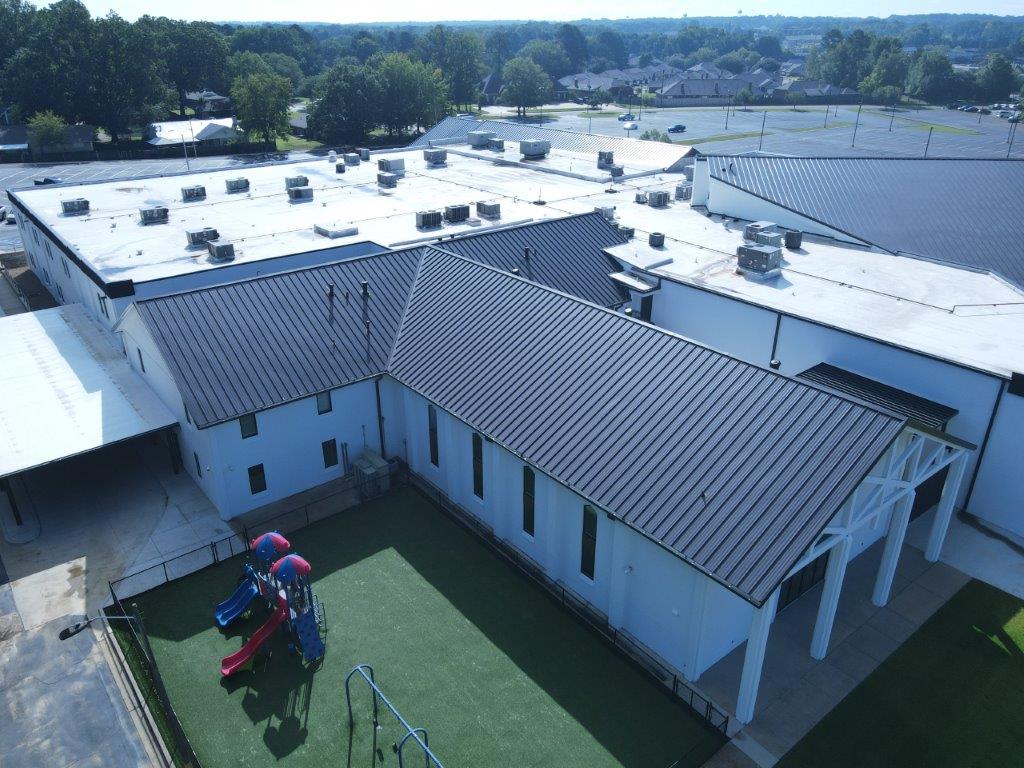
We scope Property Management Firms for Boise commercial buildings with documented access, drainage, membrane, storm, and budget notes.
Boise has become one of the most attractive secondary data center markets in the western United States over the past decade, driven by factors that align well with the needs of hyperscale and enterprise operators: low-cost hydropower from the Idaho Power network, land costs dramatically below the Bay Area or Seattle, a rapidly growing tech workforce from the migration of California technology workers, and a seismic risk profile that, while present, is meaningfully lower than the Pacific Coast markets. Amazon Web Services has invested in the region through its Pacific Northwest infrastructure network, and the corridor from Boise through Nampa and Caldwell has seen industrial and tech park development that supports continued data center growth. Micron Technology's Boise semiconductor operations are central to a significant base of private enterprise data center demand that has been central to the local market for decades.
Boise's data center roofing environment is defined by four-season weather extremes that are more pronounced than Pacific Coast markets — real winters with sustained snow, hot and dry summers, and a late winter-early spring combination of freeze-thaw cycling that stresses roofing materials in ways that a mild Seattle winter does not. The high desert climate around the Treasure Valley means that summer UV radiation is more intense than in Seattle or Portland, and the daily temperature range — from cool mornings to 95°F+ afternoons in July — drives thermal expansion and contraction in roofing materials that, over years, is a significant fatigue mechanism. Boise data center roofs specified for the Pacific Northwest's maritime climate are under-specified for the Treasure Valley's continental conditions.
CRAC unit penetration management at Boise data centers must address the seasonal temperature challenge: in January, Boise averages overnight lows in the high teens to mid-20s°F, while data center rooftop equipment runs continuously regardless of exterior temperature. This temperature differential creates condensation on the interior surfaces of cold CRAC unit curbs during the coldest periods, and any condensate management detail that works well in summer may be inadequate in January conditions. Condensate drain lines from CRAC units in Boise data centers should incorporate electric trace heating at vulnerable sections — where the drain line passes through areas of the roof assembly that could reach freezing — to prevent ice blockage that would force condensate back into the CRAC unit.
Generator systems at Boise data centers benefit from the region's relatively clean air quality compared to California or Texas markets, simplifying the air quality permitting process for standby generators. Idaho Department of Environmental Quality generator permits are generally less restrictive than California or Texas non-attainment area regulations, allowing for more straightforward exhaust stack design and location decisions. However, Canyon and Ada Counties (the Boise metro) are subject to winter temperature inversions that can trap pollutants in the valley, and data center generators in the urban core should still consider stack height and direction in relation to air intakes and neighboring properties.
Wind loading in Boise is less of a critical factor than in the Gulf Coast or High Plains markets, but the Treasure Valley does experience regular gap winds from the Snake River Plain and occasional mountain-wave events from the Owyhee and Boise Front ranges that can produce 50+ mph gusts. FM Global uplift design for data center roofs in the Boise area should be based on ASCE 7 calculations for the specific site rather than a generic commercial standard, with careful attention to exposure category since many Boise area data center sites are in Exposure Category C or D due to the valley's relatively open terrain.
Idaho Power's hydropower rates are one of Boise's strongest competitive advantages for data center operators. The ability to power a data center with predominantly renewable hydropower at very competitive rates has attracted operators who prioritize both cost and sustainability reporting. The roof assembly design for Boise data centers should acknowledge this energy cost environment: a data center with extremely low power costs has a slightly different economic calculus for insulation R-value upgrades than one in California with high electricity rates. That said, R-25 or better is appropriate for Boise's climate and provides adequate payback regardless of the specific power rate environment.
TPO in 60 or 80 mil is the appropriate specification for Boise data center roofs, with 80 mil providing better long-term UV resistance for the Treasure Valley's sunny, low-humidity environment. The dry air that helps keep Boise's summers comfortable also means that TPO's plasticizer migration rate is higher than in humid climates — the low relative humidity pulls volatile components from the membrane surface over time, accelerating the aging process compared to the same product in a coastal climate. Specifying higher-quality TPO products with documented low-VOC stabilizer systems pays off in extended service life in Boise's dry continental climate.
Conduit and cable penetrations at Boise data centers present a specific challenge in winter: cold conduit that runs from the below-freezing outdoor environment through the roof membrane into the conditioned data center space will have ice formation potential at the roof deck level during the coldest weeks of January and February. Thermal bridging through metal conduit that spans the insulation layer — particularly for large-diameter power conduit — creates a cold spot at the deck level that can produce frost or condensation on the deck undersurface. Specifying foam-in-place thermal break sleeves around conduit in the insulation zone eliminates this thermal bridge without compromising the conduit's mechanical protection.
Seismic considerations for Boise data center equipment mounting are genuine, as the western Snake River Plain has an active fault system that has produced historically significant earthquakes including the 1983 Borah Peak event (magnitude 6.9, centered in central Idaho but felt throughout the state). Ada County seismic design requirements under ASCE 7 put Boise in Seismic Design Category D for most occupancy types, requiring engineer-stamped seismic anchorage calculations for rooftop equipment and flexible flashing connections that can accommodate differential movement. This requirement is often overlooked by contractors who primarily work in the Pacific Northwest and assume Idaho's seismic risk is lower than Oregon's or Washington's coastal zones.
Boise's low humidity and intense summer UV accelerate plasticizer migration in TPO membranes faster than the Pacific Coast's maritime climate. In practical terms, a 60-mil TPO that might last 22 to 25 years in Seattle may show surface oxidation and reduced flexibility at 15 to 18 years in Boise. Specifying 80-mil TPO from a manufacturer with documented UV and thermal stabilizer performance addresses this, and the cost difference between 60 and 80 mil is small relative to the extended service life. Annual inspection for surface chalking and micro-cracking at flashing terminations identifies early-stage UV degradation before it becomes a membrane integrity issue.
Idaho Power's predominantly hydropower supply at competitive rates reduces the dollar-per-kWh savings from reflective membrane specification compared to California or Texas markets, but it doesn't eliminate the benefit. A reflective white TPO membrane still reduces cooling load and peak demand charges, which exist on Idaho Power commercial rate schedules regardless of the generation source. The environmental reporting value of a lower-energy roof assembly also contributes to data center sustainability scoring that many operators now report publicly. R-25 or better insulation is appropriate regardless of power cost, as the payback period remains within 5 to 7 years even at Idaho's relatively low electricity rates.
CRAC condensate drain lines in Boise data centers should have electric trace heating tape installed on any section that passes through an unheated roof space or the exterior insulation zone. The trace heating element should be thermostatically controlled to activate when conduit temperature drops below 40°F and should be connected to the same circuit as the CRAC unit it serves, so that if the CRAC unit is running, the trace heat is available. Lines that drain through roof penetrations to the exterior should use a drain line heater rated for the expected minimum winter temperature at the exit point — typically 5°F to 10°F for the Boise area in extreme cold events.
Ada County is in ASCE 7 Seismic Design Category D for most commercial occupancies, which requires equipment anchorage calculations from a licensed engineer certifying that the anchorage design meets ASCE 7 Chapter 13 (nonstructural component) requirements. For CRAC units, generators, and cooling towers, this means the curb and equipment pad must be designed for both vertical and horizontal seismic loads, not just the gravity load of the equipment. Standard non-seismic equipment curbs are not code-compliant in Ada County. The engineer's stamped calculations for equipment anchorage should be part of the building permit submittal and retained in the facility's maintenance records.
At Idaho Power's commercial electricity rates, the incremental cost of adding R-5 of continuous insulation to a data center roof (approximately 1 inch of polyiso, adding roughly $0.30 to $0.50 per square foot to the roof system cost) pays back in reduced cooling energy in approximately 8 to 12 years. This is a longer payback than California but still within the roof system's service life, making R-25 or better the economically justified specification for a Boise data center. For facilities committed to long-term energy reporting under green building or ESG frameworks, the added insulation contributes to lower annual kWh/sqft metrics that may have additional value in sustainability reporting beyond the direct energy cost savings.
Leak points, drainage, seams, penetrations, edge metal, roof access, and interior risk should be clear before the next roof decision is priced.
Immediate repair, maintenance, coating, recover, and replacement choices should be measured against roof age, moisture risk, tenant disruption, and budget timing.
A site visit is useful when the owner needs a documented roof condition, active leak response, storm review, or a clearer capital plan.