
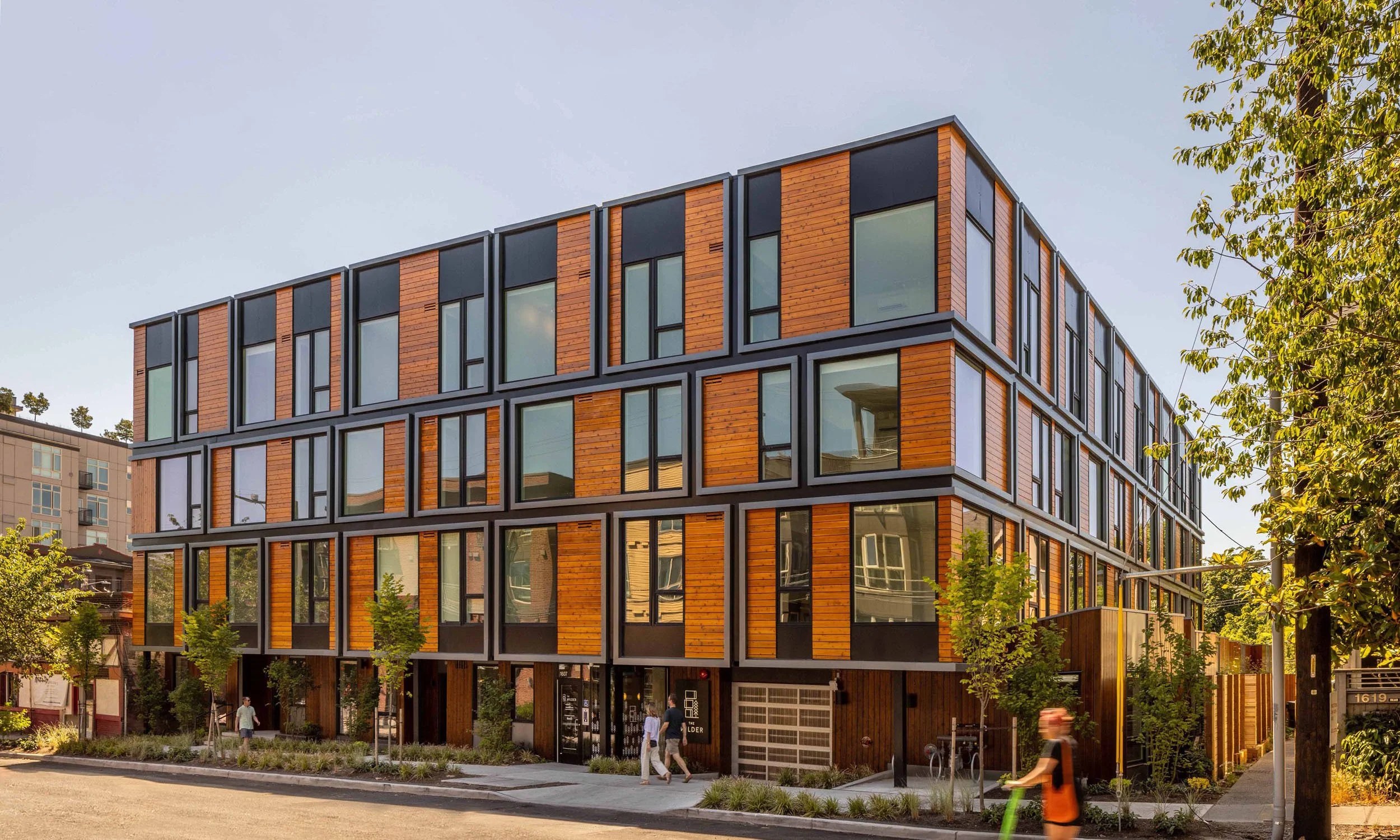
Commercial roofing for apartment complexes, condominiums, and multifamily residential buildings.
Boise's multifamily market has experienced some of the fastest rent growth and construction activity of any mid-sized American city over the past decade, with developers like Veritа Homes and the team behind the Banner Bank Building apartments in the downtown core bringing large mixed-use residential projects to a city that has transformed from a regional government center into a destination for remote workers and technology professionals. The Boise metro's apartment communities range from luxury high-rises along the Connector to three-story garden apartments spread across the Meridian and Nampa suburban markets, and the property managers and HOAs overseeing these communities face roofing challenges that are uniquely demanding because the people most affected—residents—live directly below the work area and cannot simply vacate the building while construction is underway.
Scheduling roofing work around occupied units is the primary operational discipline that separates qualified multifamily roofing contractors from those who work primarily on commercial buildings. In a Boise apartment community of 150 units, every resident is a stakeholder whose daily routine—sleep schedule, work-from-home setup, pet management, parking access—is affected by roofing construction activities. Professional multifamily roofers in the Treasure Valley work with property managers to develop a detailed phase plan that rotates work from building to building in a sequence that limits noise impact duration to any single group of units and that completes work on each building section before moving to the next, rather than working across the entire property simultaneously.
Property manager and HOA coordination is the relationship management dimension of multifamily roofing that requires as much attention as the technical execution. Boise HOAs governing condominium communities—increasingly common in the downtown core and the new mixed-use developments in Garden City—have specific CC&R and declaration requirements about who has authority to engage contractors for common area roof work, what notice must be given to unit owners before common area construction begins, and how project costs are assessed across the ownership group. Roofing contractors serving the Boise condo market must understand these governance structures and should never commence work on an HOA-governed property without written authorization from the appropriate governing body with documented quorum requirements satisfied.
Fire-rated roof assembly requirements are a non-negotiable building code requirement for Idaho multifamily construction that directly affects membrane and insulation specification. Idaho Building Code, following the IBC, requires fire-rated roof assemblies for Type I and Type II construction multifamily buildings, which encompasses virtually all mid-rise and high-rise Boise apartment buildings. The specific fire assembly listing that applies depends on the structural deck type—concrete, steel, or wood—and on the occupancy height of the building, and the roofing contractor must specify and install only assemblies that carry the UL or FM fire resistance listing required for the specific building. Using a non-listed assembly on a fire-rated multifamily building is a code violation that can trigger stop-work orders and costly remediation.
Balcony and deck waterproofing at roof-to-building transitions is a frequent source of multifamily roofing claims in the Boise market because the transition between the roof assembly and the structural balcony deck or amenity terrace is a detail that requires specific expertise beyond standard roofing. Boise's cold winters produce freeze-thaw cycling at these transitions that can cause water intrusion into the framing members behind the balcony structure, and once framing is wet, the dry climate of the Treasure Valley does not reliably dry it before secondary damage begins. The waterproofing membrane at balcony-to-wall transitions must be continuous from the roofing membrane through the wall flashing and across the structural deck surface, with no gaps or reliance on sealant alone at any transition point.
Resident notice procedures are both a best practice and, in some cases, a legal requirement for Idaho multifamily communities. Idaho law does not prescribe a specific notice period for rooftop construction on apartment buildings, but the property management standard of practice in the Boise market is to provide written notice to all affected residents at least 72 hours before work begins in their building section, explaining the scope, duration, and noise impact of the work and providing a dedicated contact number for questions and complaints. Communities that handle resident communication well during reroofing projects consistently report higher resident satisfaction scores than those that treat resident notice as an afterthought, and positive resident relations during construction directly affects lease renewal rates in the competitive Boise apartment market.
Insurance claim handling for storm-damaged Boise apartment communities requires property managers to navigate the interaction between the community's property insurance policy, the roofing contractor's warranty, and the resident's personal renter's insurance. Hailstorms in the Treasure Valley—more frequent in western Idaho than many residents realize—can damage large multifamily roof areas simultaneously, triggering insurance claims that require detailed documentation of damage extent, cause, and pre-loss roof condition. A property manager who maintains current aerial imagery, recent inspection reports, and documentation of all prior repairs is in a much stronger position to support a full insurance claim than one who cannot produce evidence of pre-loss roof condition. Boise roofing contractors who work in the multifamily market should provide post-storm assessment reports in a format specifically designed to support insurance claim documentation.
Phased replacement for large Boise apartment complexes—common in the Meridian and Nampa suburban markets where 300-to-500-unit garden apartment communities were built in the late 1990s and early 2000s—requires a multi-year capital plan that sequences building replacements to maintain warranty currency while spreading capital expenditure across multiple fiscal years. A professional multifamily roofing contractor will provide a detailed condition assessment of every building in the community, ranking them by remaining useful life, and propose a phased replacement schedule that prevents the worst-condition buildings from developing active leaks while the capital plan executes. Boise property management companies managing large suburban apartment communities should obtain this type of assessment from their roofing contractor rather than waiting for leak reports to drive the replacement sequence.
Cost per square foot for multifamily roofing in Boise runs $10.00 to $14.00 installed, reflecting the coordination premium of occupied-building work and the specific requirements of fire-rated assembly specifications for multifamily construction. Large garden apartment communities with 20 or more buildings benefit from multi-building mobilization efficiency, but the phased work approach necessary to respect occupied units limits the productivity gains compared to a commercial project where the entire roof can be accessed simultaneously. Property managers should plan for a 15 to 20 percent premium over comparable commercial pricing for an equivalent square footage of multifamily roofing.
Leak points, drainage, seams, penetrations, edge metal, roof access, and interior risk should be clear before the next roof decision is priced.
Immediate repair, maintenance, coating, recover, and replacement choices should be measured against roof age, moisture risk, tenant disruption, and budget timing.
A site visit is useful when the owner needs a documented roof condition, active leak response, storm review, or a clearer capital plan.