
Commercial roofing for retail centers, strip malls, big-box stores, and shopping destinations.
Boise's retail market has expanded dramatically over the past decade, with the Meridian corridor anchoring much of the region's big-box and power center growth. Properties along Eagle Road and Ten Mile Road now house dozens of national tenants in strip configurations and large-format shopping centers, and the flat and low-slope roofs on those buildings take a beating from Idaho's climate swings. Roofing contractors who work in the Treasure Valley understand that a Boise retail roof faces hard freeze-thaw cycling in winter, intense UV exposure in summer, and wind events that push across the Boise foothills with enough force to test membrane adhesion on every exposed edge.
Property managers overseeing the shopping centers off Fairview Avenue and State Street know that tenant disruption is the single biggest concern when scheduling roof work. A nail gun running at 7 a.m. above a boutique fitness studio or a national cell phone retailer can trigger lease friction fast. Phased work plans that isolate the active roof section from foot traffic below, combined with quiet-hour agreements written into the contractor scope, are now standard practice for Boise retail properties that want to maintain tenant relationships while getting necessary repairs or full replacements completed.
TPO single-ply membrane has become the dominant system on new Treasure Valley retail construction, and for good reason. The white reflective surface cuts cooling loads during Boise's consistently sunny summers, helping anchor tenants whose HVAC systems run hard from June through September. Fully adhered 60-mil TPO over a continuous polyiso insulation board delivers the R-value performance that newer energy codes require, and the heat-welded seams hold up against the thermal cycling that causes lapped seams on older EPDM systems to open over time.
HVAC penetrations are a persistent challenge on Boise retail roofs. Strip malls in areas like The Village at Meridian or the older centers near Boise Towne Square typically house six to twelve rooftop units per building, and each penetration is a potential leak point. Properly flashed curb mounts with pitch pockets sealed to current standards, combined with pipe boot replacements timed to coincide with any re-roofing project, prevent the incremental water intrusion that shows up as interior ceiling staining long before a tenant reports it to a property manager.
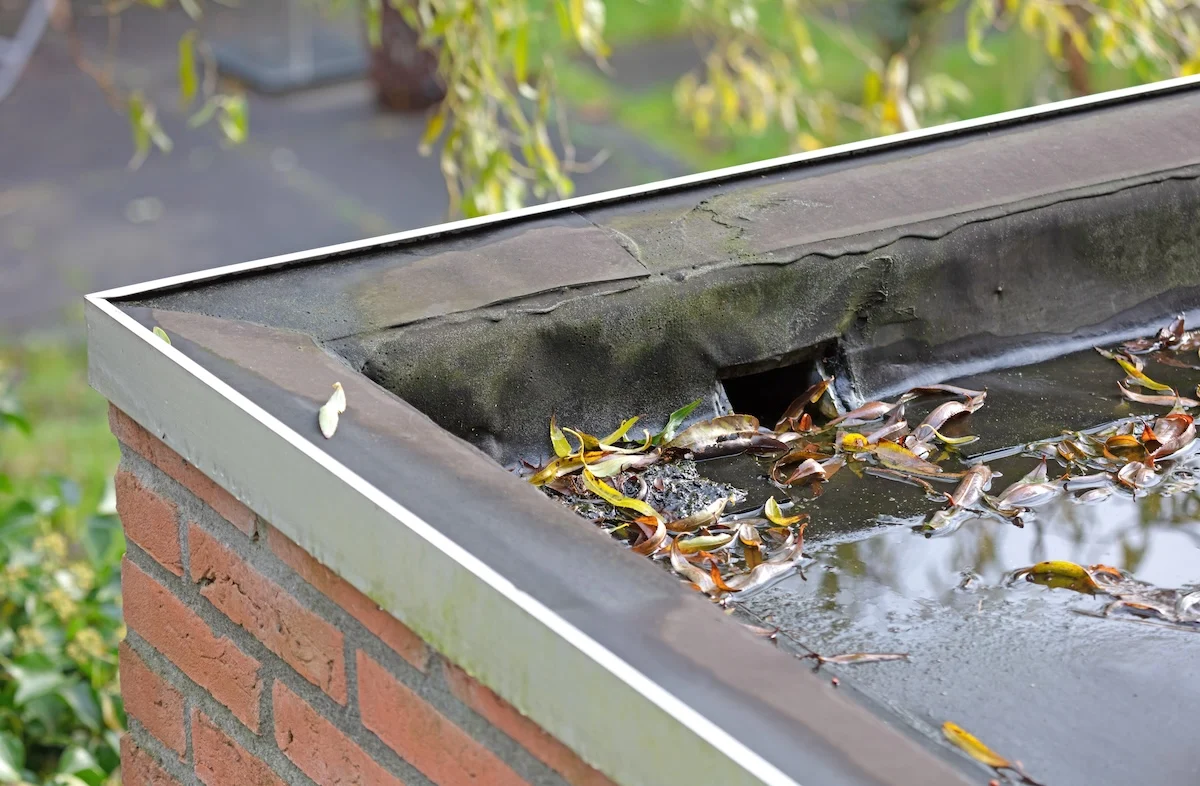
Flat roof drainage on Treasure Valley retail properties requires particular attention because ponding water accelerates membrane degradation in freeze-thaw conditions. Many of the older strip centers along Cole Road and Overland Road were built with interior drains that have since been supplemented by overflow scuppers, but sediment buildup from wind-blown agricultural dust common to the valley can clog those systems quickly. A twice-annual drain inspection and cleaning program, documented in writing, protects both the roof warranty and the property owner's position if a water damage claim ever involves a tenant dispute.
Retail brand standards increasingly dictate roofing material choices on pad sites and standalone stores in the Boise metro. When a national fast-casual restaurant or a pharmacy chain builds or renovates, their corporate construction guidelines specify membrane type, color, and installation method, and the property owner or developer is responsible for meeting those specs. Working with a roofing contractor who has prior experience executing to national retail brand standards eliminates the back-and-forth that delays certificate of occupancy on time-sensitive openings.
CAM budget planning for multi-tenant retail in Boise should account for the accelerated wear that Idaho's UV index imposes on roofing membranes. Owners who budget a prorated roof reserve into their CAM structure from year one avoid the painful conversation with tenants when a major repair or full replacement hits all at once. A well-documented roof maintenance log, updated after each inspection and any weather event, also supports the case for cost recovery under triple-net lease structures common across the Treasure Valley's Class A retail inventory.
The Ada County commercial real estate market has seen sustained investor interest, with cap rates on anchored strip centers remaining competitive even as interest rates have shifted. Buyers conducting due diligence on retail assets in Boise routinely request roof condition reports as part of their property assessment, and a roof with documented maintenance history commands better pricing than one with deferred work. Sellers who invest in a pre-sale roof inspection and address any open items before listing recover that cost through faster transactions and fewer price reductions.
Choosing a commercial roofing contractor in the Treasure Valley means looking for crews with verifiable manufacturer certifications on the systems they install. Owens Corning, Carlisle, and GAF each offer contractor certification programs that come with extended manufacturer warranties covering both materials and workmanship. For a retail property with dozens of tenants and significant CAM exposure, that manufacturer-backed warranty is a tangible asset that transfers with the property and protects the next owner just as it protected the first.
Leak points, drainage, seams, penetrations, edge metal, roof access, and interior risk should be clear before the next roof decision is priced.
Immediate repair, maintenance, coating, recover, and replacement choices should be measured against roof age, moisture risk, tenant disruption, and budget timing.
A site visit is useful when the owner needs a documented roof condition, active leak response, storm review, or a clearer capital plan.