
Treasure Valley Hail Is Real, and It Is Easy to Miss
Idaho's high-desert thunderstorms build fast in late spring and summer, and when they carry hail into the Treasure Valley it tends to hit hard for a short window rather than lingering. On a steep residential roof that damage is visible from the street. On a low-slope commercial roof it usually is not — a bruised TPO membrane, a dented metal coping cap, or a cracked skylight dome can all sit unnoticed above a Boise Bench retail strip or a Meridian office building for months until a leak shows up inside. Insurance claims for hail damage live or die on whether that damage was found, documented, and tied to the right storm date before the roof weathered any further.
Cosmetic Damage vs Functional Damage
Not every hail mark is a repair item, and not every insurer treats them the same way, which is exactly why the distinction has to be made carefully rather than assumed. Cosmetic damage is surface bruising or granule displacement that has not broken the waterproofing layer. Functional damage is a puncture, split, or fracture that compromises how the roof sheds water — on a membrane, a metal panel, a skylight, or a coating system. We test suspect areas individually rather than eyeballing the whole roof and calling it one way or the other, because a single roof section after a Treasure Valley storm often has both types of damage mixed together.
What We Document on a Boise Commercial Roof
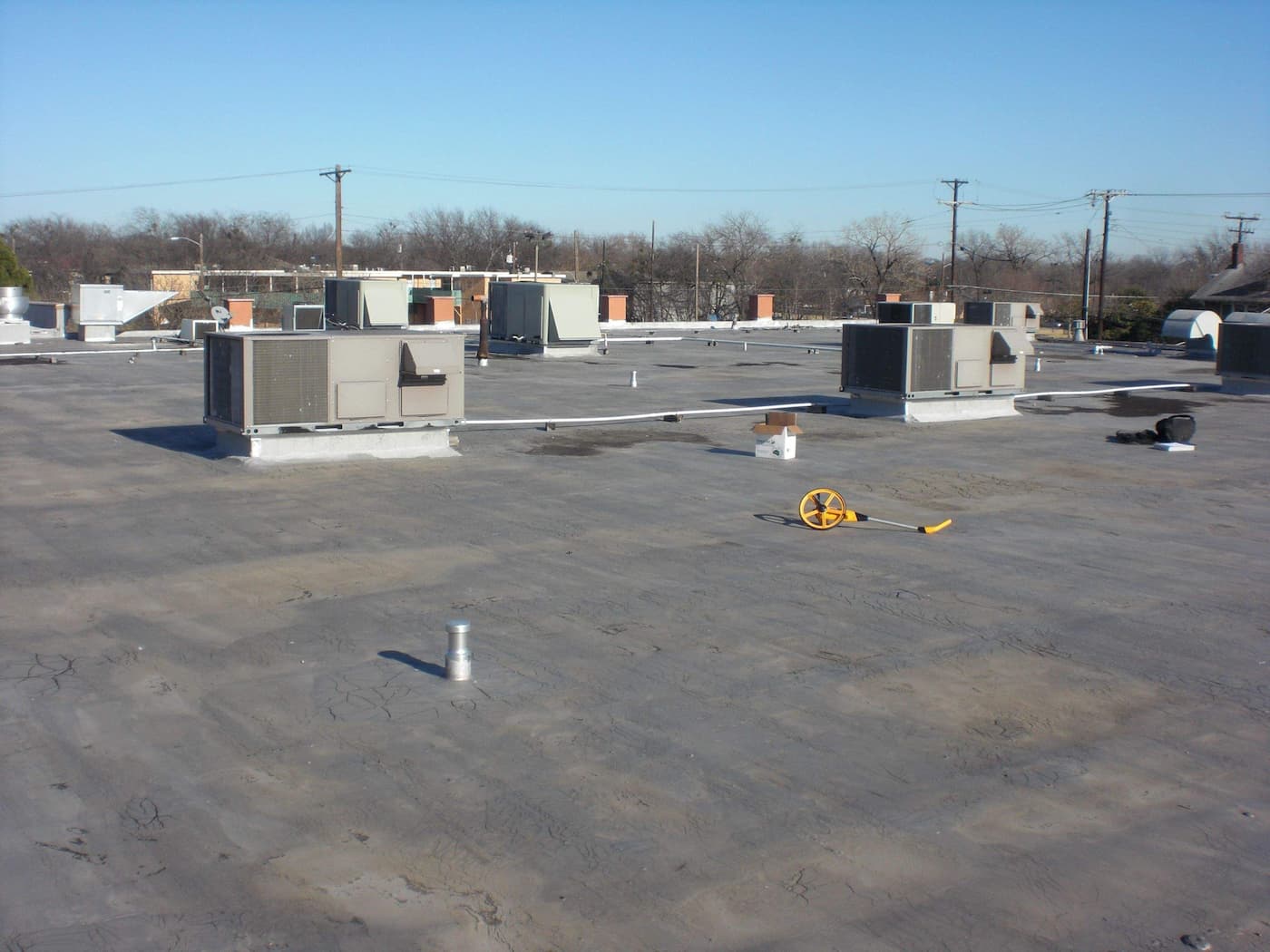
We walk the field of the roof in a grid pattern and photograph every hail strike we find, with a scale reference and a location note tied to a roof plan. We check membrane seams and laps, rooftop unit curbs and cabinets, coping and edge metal, skylight domes and frames, pitch pockets, and any coated or recoated sections, since coatings can mask or exaggerate hail marks depending on their age and thickness. Metal roofs common on industrial buildings near Gowen Field and the airport corridor get a different check — dents, oil-canning, and loosened fasteners read differently on standing seam or R-panel than they do on membrane roofs.
Building the Claim-Ready Record
We're your roofing contractor, not a public adjuster — we document and substantiate the hail damage so you and your adjuster work from an accurate scope. That means a written report with photos, measurements, and a clear description of what was found and where, handed over in a form an adjuster, property manager, or ownership group can use directly. We do not negotiate the settlement or promise what the claim will pay; we make sure the roof itself has been read correctly before that conversation happens.
Timing Matters After a Storm
Hail bruising on a membrane can be harder to distinguish from ordinary weathering the longer it sits, and UV exposure across a Boise summer does not do the roof any favors. Owners across Ada and Canyon County — Meridian, Nampa, Eagle, Garden City, Kuna, Star — who schedule an inspection soon after a known hail event end up with a cleaner, more defensible record than owners who wait until a leak forces the issue. If you know the storm date, that date becomes part of the documentation; if you do not, we can often narrow the window from roof condition and local storm history.
What to Have Ready Before the Inspection
A faster, more useful inspection starts with a few things on hand: the building address and roof access point, any prior roof reports or manufacturer warranty documents, interior photos if a leak has already appeared, and the approximate date of the storm if it is known. None of that is required, but it shortens the time between the hail event and a written record, which matters more with hail than with almost any other kind of storm damage because the visual evidence fades.
Portfolios and Multi-Building Properties
Hail cells in the Treasure Valley are often narrow and can hit one side of a business park while leaving a building two blocks away untouched. Property managers overseeing several roofs across Boise, Meridian, and Nampa should not assume damage is uniform across a portfolio just because one building was hit. We document each roof independently, building by building, so the claim record reflects what actually happened at that specific address rather than an assumption carried over from a neighboring property.
We check whether the membrane, coating, or metal has been punctured, split, or had its granule and protective layer worn through to the substrate. Surface bruising alone is usually cosmetic; a break in the waterproofing layer is functional.
Not necessarily. We test and document each mark individually. Isolated cosmetic hits may only need monitoring, while clustered functional damage across a roof section usually points toward repair or replacement.
As soon as reasonably possible. Hail bruising can be harder to identify once a membrane has weathered further, and prompt documentation ties the damage clearly to the storm date.
Yes. We provide photos, measurements, and a written assessment describing what we found and where, for your records and your adjuster's review.
Yes. We check curb flashing, skylight domes, coping caps, and other rooftop equipment for dents, cracks, and seal damage, beyond the field membrane itself.