
Wind in the Treasure Valley Does Not Always Announce Itself
Boise sits where high-desert pressure systems and summer thunderstorm outflow both push through the valley, and the wind that results can arrive as a sustained downslope blow or a short, sharp gust line ahead of a storm cell. Either way, a commercial low-slope roof takes that load differently than a house does: membrane can lift at the perimeter before it ever tears, edge metal and coping can work loose fastener by fastener over more than one event, and rooftop units can shift enough to open a gap in their curb flashing without falling over. None of that is always visible from the ground, which is exactly why wind claims get contested when the roof was not inspected closely.
How Wind Actually Damages a Low-Slope Roof
Uplift starts at the edges and corners of a roof, where wind pressure is highest, and that is where we look first — parapet coping, gravel stop, termination bars, and the outer few feet of membrane. From there we check field seams for stress or separation, rooftop unit cabinets and curbs for movement, skylight and vent flashing for cracking, and any loose gravel, ballast, or debris that wind may have relocated into drains and scuppers. A roof can pass a casual walk-through and still have fastener pull-out or seam stress that will fail on the next storm if it is not documented and addressed now.
Documenting Storm-Specific Damage
We tie what we find to the event: photographing lifted or torn sections, measuring the extent of displaced edge metal or coping, and noting which side of the building or roof section took the worst of it, which often lines up with the storm's direction. That level of detail is what separates a usable claim record from a general statement that "the roof was damaged in the storm." We're your roofing contractor, not a public adjuster — we document and substantiate the wind damage so you and your adjuster work from an accurate scope, and we leave the settlement conversation to the parties who own that decision.
Emergency Dry-In Before the Permanent Repair
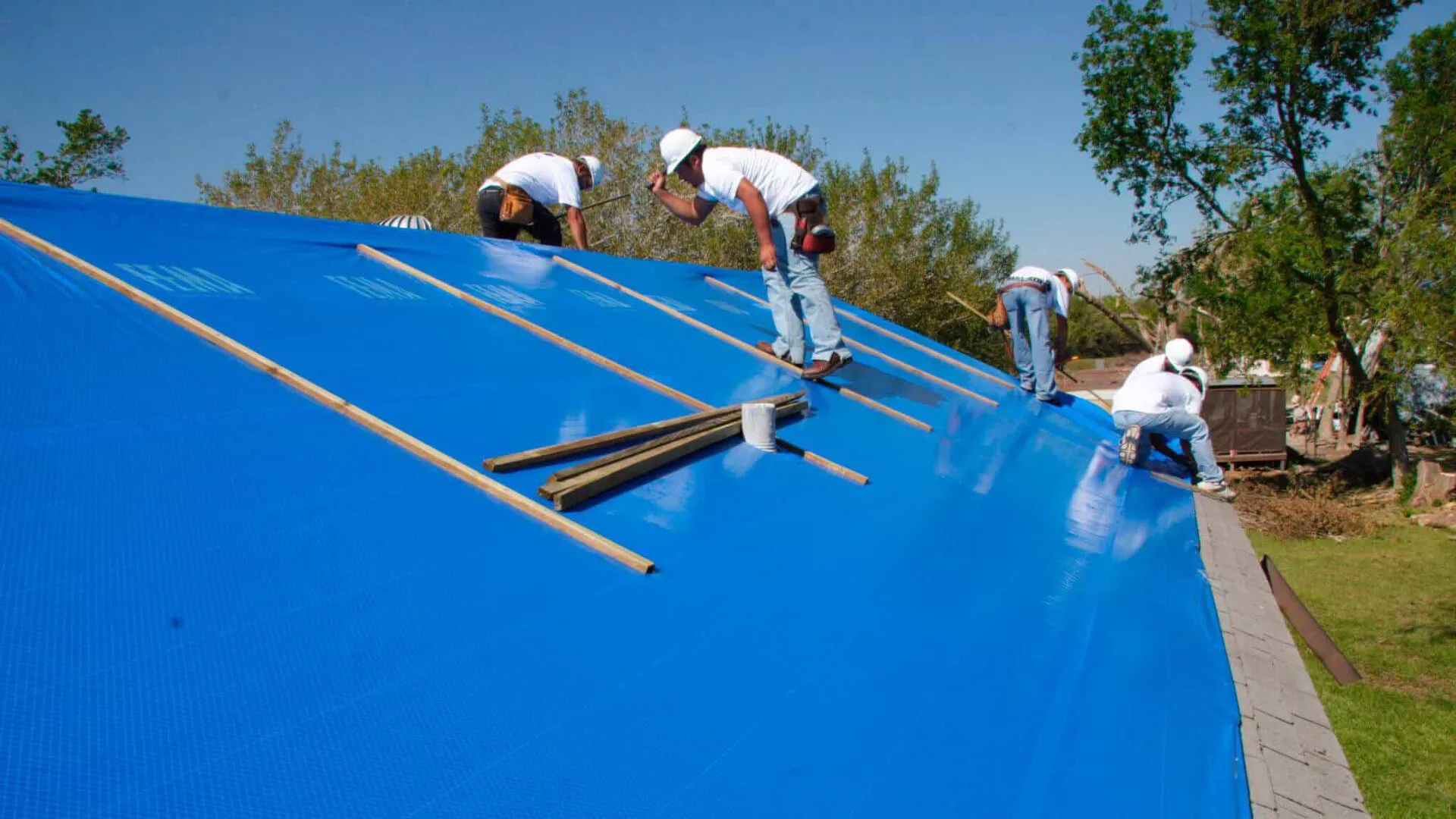
If wind has opened a seam or torn membrane enough to let water into the building, the priority shifts to stopping active intrusion before anything else. Temporary tarping or dry-in work protects the interior and the roof deck while the permanent repair scope is finalized, and we keep that emergency work documented separately from the repair estimate so it is clear what was done immediately versus what is part of the larger claim.
Portfolio Owners Across the Valley
Property managers with buildings spread across Boise, Meridian, Nampa, Caldwell, Eagle, Garden City, Kuna, and Star often see wind hit unevenly across a portfolio — one roof takes real damage while a building two miles away is untouched. We document each roof on its own, because an adjuster reviewing a multi-building claim needs building-specific evidence, not a general assumption that the whole portfolio was affected the same way.
Rooftop Equipment and Mechanical Curbs
Wind claims are frequently underscoped because the inspection stops at the membrane and never checks the mechanical side of the roof. HVAC units, exhaust fans, and condenser cabinets common on office and retail roofs across the valley can shift on their curbs during a strong gust event, stressing the flashing seal around the base even when the unit itself still runs fine. We check curb attachment, gasket condition, and duct penetrations as part of every wind assessment, since a compromised curb seal is a slow leak waiting to happen.
Repeat Events Over a Single Season
The Treasure Valley can see more than one significant wind event in a season, and it is not always clear which storm caused which piece of damage once a roof has been hit twice. Where possible, we note prior known events and separate older weathering from fresh damage, so the claim reflects the most recent event accurately instead of bundling unrelated wear into one estimate. A roof with a known repair history benefits from that separation the most, since an adjuster comparing before-and-after photos needs to know which defects predate the storm in question.
Metal Roofs and Standing Seam Panels
Industrial buildings near I-84 and the airport corridor, along with newer office and flex-space construction around Meridian, often carry standing seam or R-panel metal roofs, and wind affects those systems differently than membrane. We check panel seams, clip attachment, ridge and eave trim, and any signs of oil-canning or panel flutter that indicate the roof took more load than the fastening pattern was designed for, even if no panel actually detached.
Lifted or torn membrane seams, loose or missing coping and edge metal, displaced rooftop unit cabinets, and cracked or pulled flashing around penetrations are the most common patterns we document.
Yes. Wind can loosen fasteners, stress seams, and shift edge metal without an obvious tear, which is why we check attachment and seams closely rather than only looking for visible openings.
Yes. High-desert windstorms moving through the valley can produce sustained gusts strong enough to lift loose coping, stress membrane attachment, and move rooftop debris into vents and drains.
We photograph and measure lifted or torn areas, note wind direction where relevant, and record which roof sections and details were affected, producing a written scope for your adjuster.
If wind has opened the roof to water intrusion, temporary dry-in or tarping should happen right away to limit further damage, and we document that emergency work separately from the permanent repair scope.